There is no legal ibogaine treatment in Ohio. Ibogaine is a Schedule I controlled substance under federal law, and no Ohio clinic can administer it. But Ohio has become the center of the loudest ibogaine funding fight in the country, because the advocates who nearly won $42 million in Kentucky moved their campaign to Columbus, where roughly $2 billion in opioid settlement money is on the table.
Here is what is actually happening in Ohio, what it does not change for patients this year, and how Ohioans reach supervised treatment in 2026.
Important safety notice: This is independent research, not medical advice or an endorsement of any clinic. Ibogaine carries documented risks of serious cardiac events, including fatal arrhythmia (torsades de pointes); at least 33 deaths have been reported in the scientific literature, most in settings without adequate pre-treatment screening or continuous cardiac monitoring. We assess what clinics publicly disclose. We do not inspect facilities, review individual medical records, or guarantee outcomes, and a listing or score on this site is not a recommendation to book. Speak with a licensed physician who knows your full medical history before considering ibogaine treatment, and read our safety guide first.
The Ohio money fight
Ohio was not among the seven states that introduced ibogaine bills in 2025. Its story runs through the settlement funds instead. After Kentucky's commission declined to commit $42 million of opioid settlement money to ibogaine research in 2024, the campaign's leader, former Kentucky opioid commission chairman Bryan Hubbard, took the effort to Ohio, pitching the OneOhio Recovery Foundation, the body distributing the state's settlement billions, alongside a second proposal for a pay-for-success program in the state treasurer's office.
The legislature responded by studying it: an Ibogaine Treatment Study Committee, chaired by Representative Justin Pizzulli, first met in late 2025 and continued meeting through the 2026 session, hearing from veterans and researchers on whether the next General Assembly should allow ibogaine in behavioral health treatment. A committee is not a program. Nothing has been funded, nothing is legal, and any Ohio operation offering ibogaine today is underground, in exactly the unmonitored setting where the deaths in the literature happened.
How Ohioans actually reach treatment
Supervised treatment means Mexico. From Cleveland, Columbus or Cincinnati the Caribbean corridor is usually the smoother trip: direct or one-stop flights reach Cancún in roughly four to six hours door to door, and clinics in Cancún and Playa del Carmen arrange airport pickup. The Baja corridor works too: fly into San Diego, about four and a half to five hours in the air, and clinics in Tijuana or Rosarito collect you at the crossing.
Published prices in October 2026 run from about $3,500 for short retreat programs to $36,000 for the longest medical stays, with most standard 7-day detox programs between about $6,500 and $13,500. The cost guide lists every published price, including which clinics publish nothing.
Choosing well from Ohio
Opioid detox is the reason most Ohioans research ibogaine, and opioid patients carry the cardiac risk, so the medical tier of clinic is not optional: physicians on staff, a 12-lead EKG before dosing, continuous monitoring, and a stated hospital plan. The safety guide covers the full checklist, the opioid detox guide covers fentanyl and methadone timelines, and every profile in the directory carries a safety-transparency scorecard.
Also see the state-by-state legal tracker and the guides for Texas, New York and what "near me" really means.
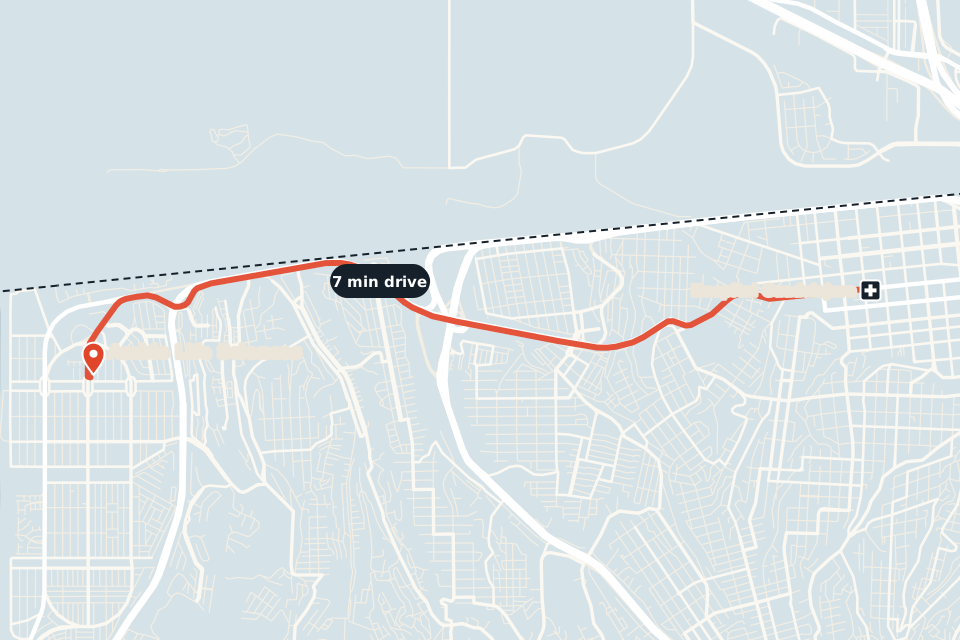 Tijuana
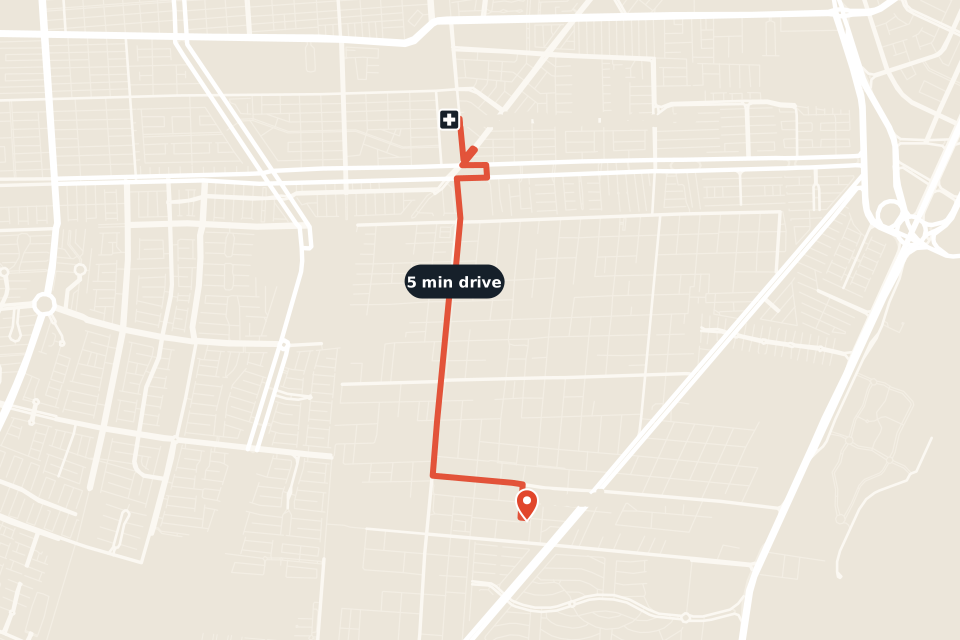 Cancún