There is no legal ibogaine treatment in Texas. Ibogaine remains a Schedule I controlled substance under federal law, and no Texas clinic can administer it. At the same time, Texas has done more than any state to change that: a $50 million state fund is now paying for the largest ibogaine clinical trial ever run in the United States.
That leaves Texans in a strange position. The state government considers ibogaine promising enough to fund at scale, while a Texan who wants treatment this year still has to fly to Mexico to get it. This page covers both halves honestly: where Texas law stands, and how Texans actually get treated.
Important safety notice: This is independent research, not medical advice or an endorsement of any clinic. Ibogaine carries documented risks of serious cardiac events, including fatal arrhythmia (torsades de pointes); at least 33 deaths have been reported in the scientific literature, most in settings without adequate pre-treatment screening or continuous cardiac monitoring. We assess what clinics publicly disclose. We do not inspect facilities, review individual medical records, or guarantee outcomes, and a listing or score on this site is not a recommendation to book. Speak with a licensed physician who knows your full medical history before considering ibogaine treatment, and read our safety guide first.
Texas law and the $50 million IMPACT trial
In June 2025 Texas passed SB 2308, creating a $50 million matching fund for FDA-track ibogaine research. In December 2025 the state awarded that fund to UTMB Health, working with UTHealth Houston, to run IMPACT, a two-year multicenter clinical trial of ibogaine for PTSD, addiction and cognitive trauma. It is the largest public investment in ibogaine research anywhere, and the veteran advocacy that pushed it through started with Texas veterans.
Two things follow from that. First, the trial is a research program, not a treatment service: there is no public sign-up that gets you dosed in Texas today, and possession or administration outside a federally authorized trial remains a crime. Second, the trial is the clearest sign that the law may eventually move. Until it does, treatment means travel.
What Texans actually do
Texans have two practical routes to vetted treatment in Mexico, where ibogaine is unscheduled and clinics operate openly. The Caribbean corridor is usually the easier trip: nonstop flights from Dallas, Houston, Austin and San Antonio reach Cancún in roughly two to two and a half hours, and the clinics in Cancún and Playa del Carmen arrange airport pickup. The border corridor works too: fly into San Diego and clinics in Tijuana or Rosarito collect you at the crossing, about twenty minutes from the airport.
Published prices in October 2026 run from about $3,500 for short retreat programs to $36,000 for the longest medical stays, with most standard 7-day detox programs between about $6,500 and $13,500. Veteran discounts are common and worth asking about directly. The cost guide compares every published price side by side.
Choosing well from Texas
Distance is the smaller decision. The one that matters is medical depth: ibogaine carries a real cardiac risk, and if you are detoxing from opioids, fentanyl or methadone, you belong at a clinic with physicians, EKG screening, continuous monitoring and a stated emergency plan, not a ceremony retreat. Our safety guide explains the screening checklist, and every profile in the directory carries a safety-transparency scorecard so you can compare clinics on what they disclose.
Also see the state-by-state legal tracker and the guides for Florida, Colorado and Oregon.
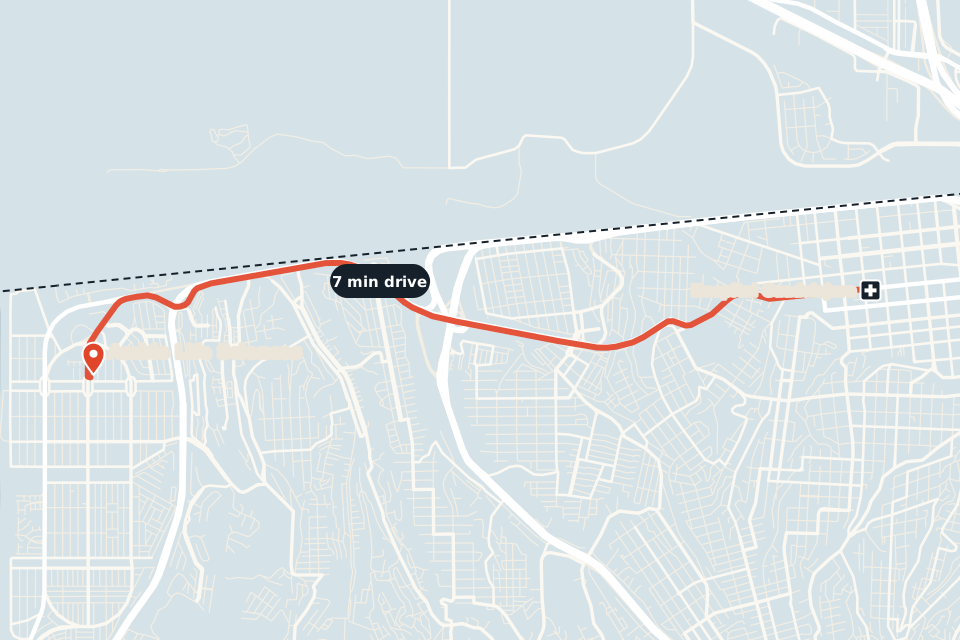 Tijuana
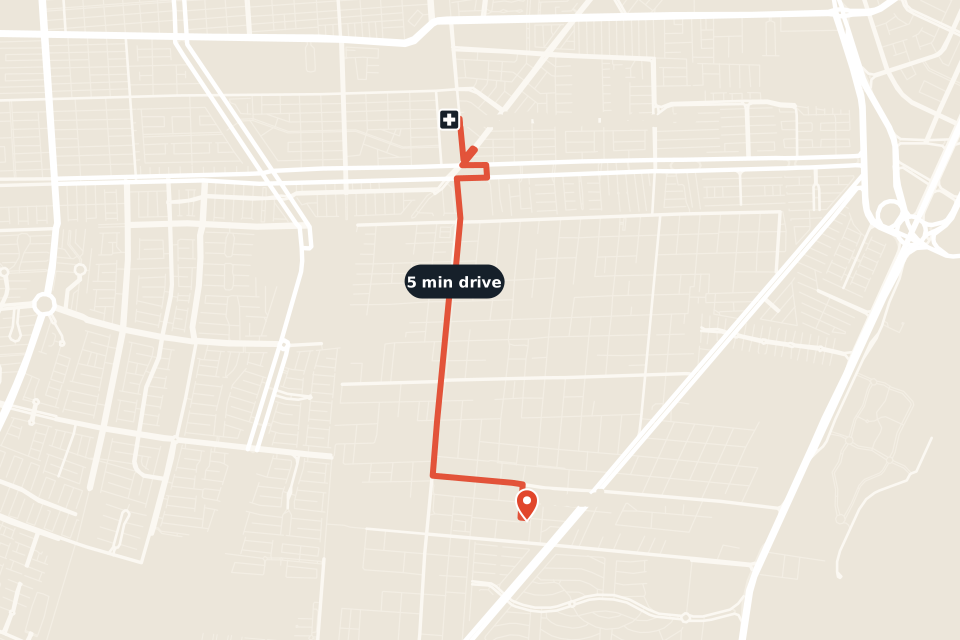 Cancún