Colorado has the most interesting ibogaine law in the country, and the most misunderstood. Personal use of ibogaine is decriminalized at the state level, the state's Natural Medicine Advisory Board has recommended regulated therapeutic access, and a 2026 law creates a first-in-the-nation pilot program. None of that means you can walk into a licensed ibogaine clinic in Colorado today. You cannot; no such clinic exists, and ibogaine treatment in Colorado remains a plan, not a service.
Here is precisely what each law did, what is still blocked, and what Coloradans who want treatment this year actually do.
Important safety notice: This is independent research, not medical advice or an endorsement of any clinic. Ibogaine carries documented risks of serious cardiac events, including fatal arrhythmia (torsades de pointes); at least 33 deaths have been reported in the scientific literature, most in settings without adequate pre-treatment screening or continuous cardiac monitoring. We assess what clinics publicly disclose. We do not inspect facilities, review individual medical records, or guarantee outcomes, and a listing or score on this site is not a recommendation to book. Speak with a licensed physician who knows your full medical history before considering ibogaine treatment, and read our safety guide first.
What Proposition 122 did and did not do
In November 2022 Colorado voters passed Proposition 122, the Natural Medicine Health Act, and the legislature implemented it through SB 23-290. Together they removed state criminal penalties for adults 21 and over who possess, use, grow or share ibogaine and several other natural medicines for personal use. Selling ibogaine remains illegal, and federal law still lists it as Schedule I, so decriminalization protects individuals from state prosecution and nothing more.
The regulated side of the program opened with psilocybin only. Licensed healing centers were restricted to psilocybin until June 1, 2026, the earliest date the state could add ibogaine to the regulated program.
The pilot program taking shape
In September 2025 the Natural Medicine Advisory Board voted 5 to 2 to recommend regulated therapeutic access to ibogaine. In May 2026 the legislature passed HB 26-1325 with broad bipartisan support, creating an Ibogaine Research Pilot Program inside the state's Behavioral Health Administration, with up to five pilot treatment sites to be selected competitively. The catch is in the statute itself: pilot sites can operate only with federal approval, because ibogaine remains Schedule I, and the state is still working out a lawful supply chain.
As of July 2026, no pilot site is licensed or operating. Colorado is closer to legal ibogaine treatment than any other state, and it is still not there.
Why the underground shortcut is the wrong one
Decriminalization has produced underground facilitators in Colorado offering ibogaine sessions in homes and rented spaces. Understand what that means medically: ibogaine prolongs the QT interval and can trigger a fatal arrhythmia, and the deaths in the scientific literature happened overwhelmingly in settings without cardiac screening, monitoring or emergency capability, which is exactly what an underground session is. Decriminalized does not mean supervised. If you are detoxing from opioids, the risk concentrates further. The safety guide covers the full screening checklist a responsible provider runs before anyone is dosed.
What Coloradans do now
Until the pilot program produces a licensed site, treatment means Mexico, where ibogaine is unscheduled and established clinics run medical protocols openly. From Denver, nonstop flights reach Cancún in about three and a half hours for the Caribbean-corridor clinics, and San Diego in about two and a half for the Tijuana border corridor, where clinics handle the crossing pickup. Published prices in October 2026 run from roughly $3,500 to $36,000 with most 7-day medical detox programs between about $6,500 and $13,500; the cost guide has every published number.
Also see the state-by-state legal tracker and the guides for Texas, Oregon and what "near me" really means.
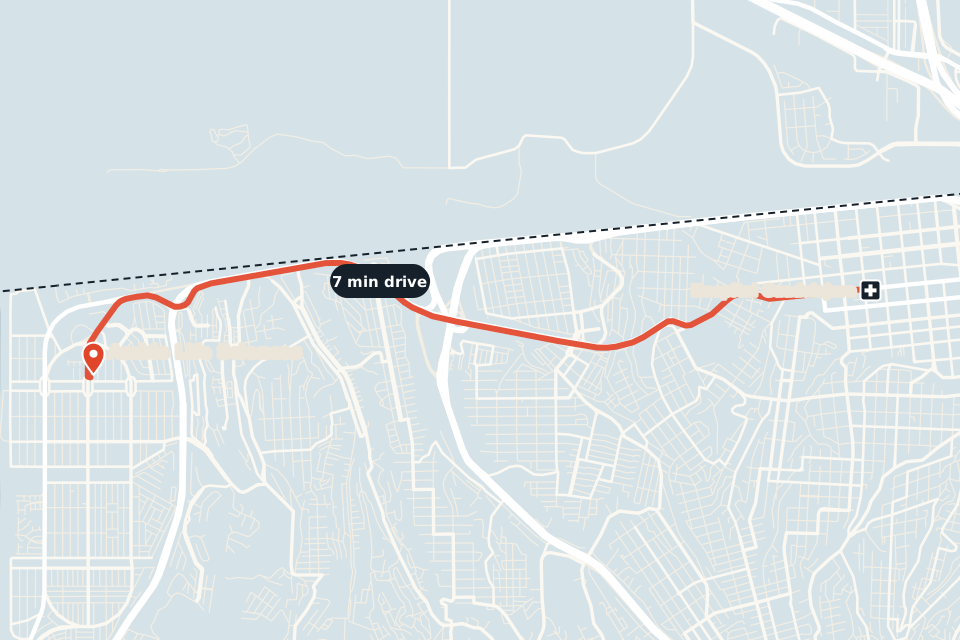 Tijuana
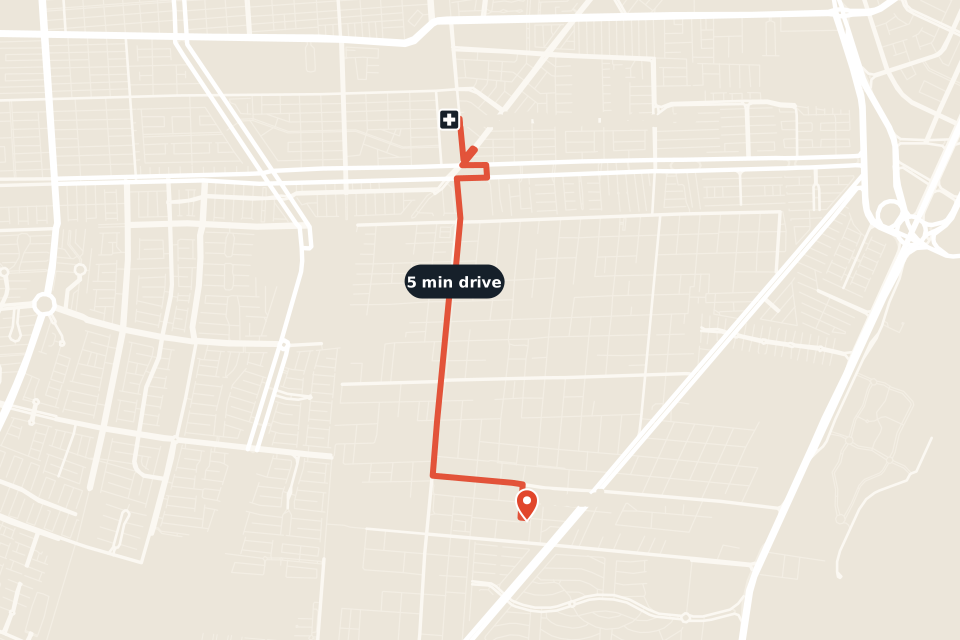 Cancún
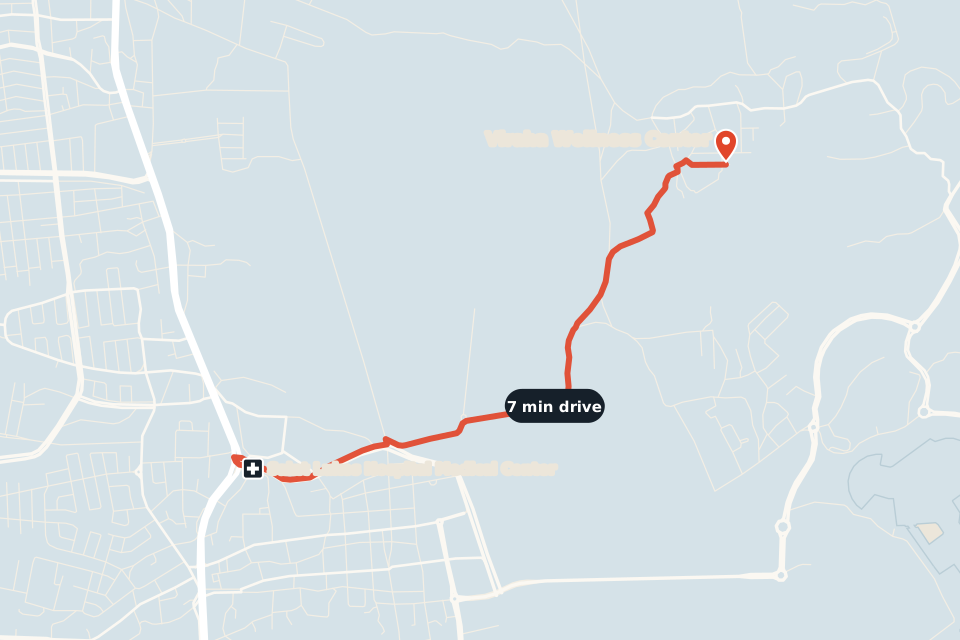 San José del Cabo